Olive Skin Foundation Guide: How to Find Your Perfect Match
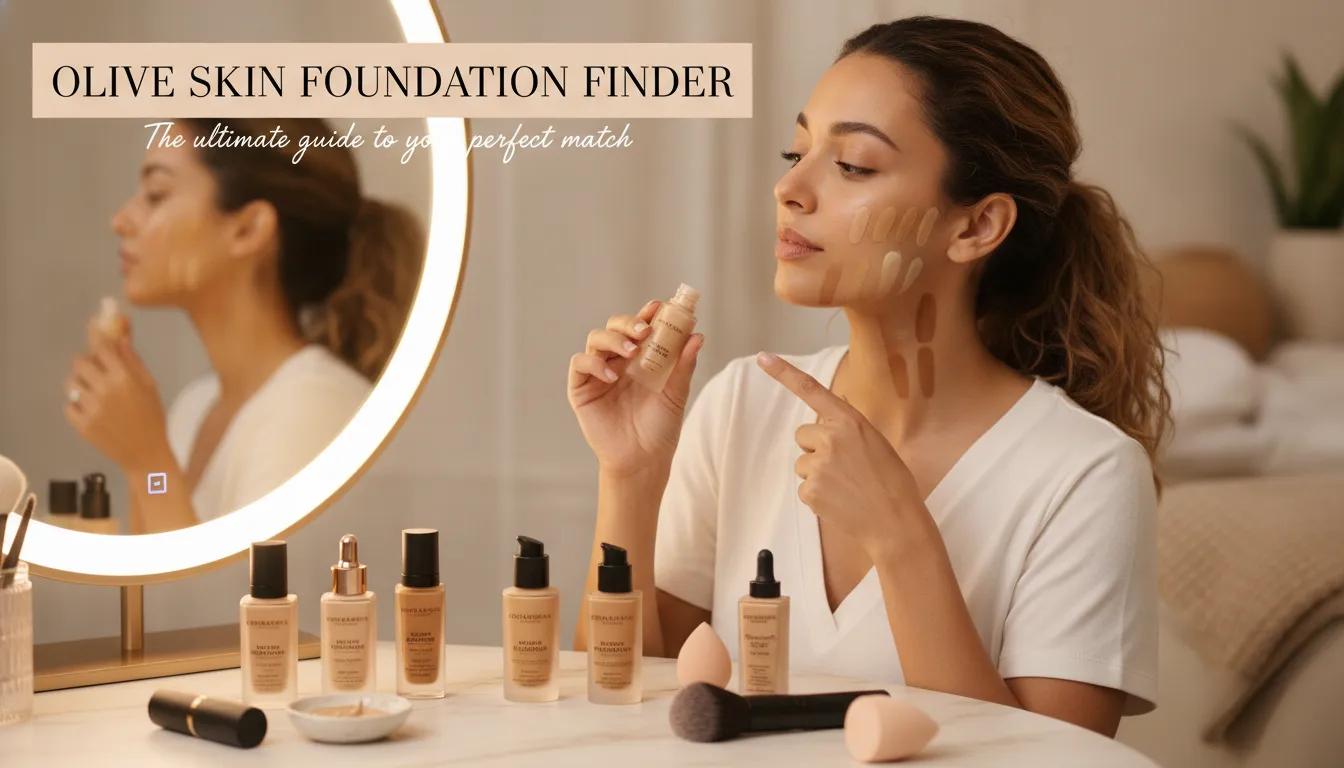
Why Foundation Shopping Is a Nightmare for Olive Skin
If you have olive undertones, you've probably stood at a makeup counter for thirty minutes swatching shades that all look wrong. Warm foundations turn orange. Cool foundations look pink or ashy. Neutral foundations somehow manage to be both at once. You leave with a "best guess" that looks fine under fluorescent store lighting but transforms into something unrecognizable the moment you step outside.
You're not bad at makeup. The beauty industry has historically ignored olive undertones entirely. Most foundation lines are formulated around a simple warm/cool binary — golden yellow or pink blue — with no room for the green-grey cast that defines olive skin.
This guide explains exactly why standard foundations fail on olive skin, how to identify the green pigment factor, which brands now offer olive-specific ranges, and how to select shades by depth and season.
Why Standard Warm and Cool Foundations Fail
The Warm Foundation Problem
Warm-toned foundations are built on yellow and golden pigments. On someone with a clear warm undertone, these shades melt into the skin beautifully. On olive skin, they sit on top of your green modifier like a layer of orange paint.
The result: your face looks sallow, overly yellow, or distinctly orange — especially around the jawline where the mismatch is most visible. Even "neutral warm" formulas that work on golden-toned skin can look wrong on olive because they lack the green component your skin needs.
The Cool Foundation Problem
Cool-toned foundations lean pink, rose, or blue-based. On olive skin, these shades create an ashy, grey appearance. The pink pigment fights against your natural green cast, making your complexion look dull or even slightly sickly in natural light.
Many olive-toned people try cool foundations because warm ones failed them, only to discover that cool doesn't work either. This double failure is one of the strongest indicators that you're dealing with olive undertones, not standard warm or cool.
The Neutral Foundation Trap
"Neutral" foundations sound like the safe middle ground, but most neutral formulas are simply a 50/50 blend of warm yellow and cool pink — which still misses the green-grey undertone entirely. You end up with something that looks almost right in the bottle but never quite settles on your skin.
See your personal color palette now
Upload a photo — get your AI beauty report in 60 seconds.
The Green and Grey Pigment Factor
Understanding the science behind olive undertones makes foundation selection much easier.
Olive skin has an extra layer of pigmentation caused by melanin interacting with both warm (carotene) and cool (hemoglobin) pigments in the skin. This creates a greenish or grey-green cast that sits on top of your base undertone — whether that base is warm, cool, or balanced.
What this means for foundation:
- You need shades with a yellow-green or golden-green base, not pure yellow or pure pink
- The green component neutralizes the orange that warm foundations create
- The yellow component prevents the ashy look that cool foundations cause
- Depth (how light or dark) is separate from undertone — you can be fair olive, medium olive, or deep olive
When swatching, look for foundations that appear slightly "muddy" or "greyish" in the bottle compared to standard warm shades. Counterintuitively, these are often your best matches.
Brands With Olive-Specific Ranges
The good news: major brands are finally catching up. Here are the ones worth knowing:
NARS
NARS has been an olive-skin favorite for years. Their shade names often include "Syracuse," "Stromboli," and "Barcelona" — all known olive-friendly options. Look for their "O" or olive-coded shades in the Natural Radiant and Light Reflecting lines. NARS undertones tend to run slightly golden-green, which works well for warm and neutral olives.
MAC
MAC's extensive shade range includes several olive-friendly options, particularly in their Studio Fix and Face and Body lines. Shades like NC42-44 range often work for medium-deep olives. MAC's "NC" (neutral cool) naming can be misleading — many NC shades actually have enough green to work on olive skin. Test rather than trust the label.
Fenty Beauty
Rihanna's line was revolutionary partly because it included undertones beyond warm and cool. Fenty shades in the 200-300 range often suit olive skin well. Look for shades described as "neutral with olive" or those that appear slightly grey-green in swatches. The Pro Filt'r foundation oxidizes minimally, which is helpful since olive shades can shift unpredictably.
NYX
NYX offers some of the most explicitly labeled olive shades at drugstore prices. Their Can't Stop Won't Stop and Bare With Me lines include shades with "olive" in the name or description. For budget-friendly olive foundation, NYX is often the best starting point.
Other Notable Options
- Rare Beauty: Several shades in the 230-370 range work for olive undertones
- Estée Lauder Double Wear: Shades like 3W1 and 4W1 often suit warm olives
- L'Oréal True Match: Look for "W" shades with green undertones (W3-W6 range)
- Milk Makeup: Their Flex Foundation includes olive-friendly neutral shades
Pro tip: When a brand doesn't label olive shades explicitly, search reviews and Reddit threads for your depth range plus "olive." The olive-skin community shares shade matches obsessively.
Shade Selection Tips by Depth
Fair to Light Olive
Fair olive skin is often misidentified as "neutral" or even "cool" because the green cast is subtle at lighter depths. Look for:
- Light-medium shades with a grey-green base (not peachy or pink)
- Avoid anything with strong orange or golden warmth
- Mix a drop of green color corrector into your closest match if needed
- Test on your jawline, not your hand — hands often tan differently
Medium Olive
The most common olive depth. You have the widest brand selection:
- NARS Stromboli, MAC NC35-NC40, Fenty 240-280 are popular starting points
- Look for "warm neutral" or "golden olive" descriptions
- Medium olives often oxidize to slightly warmer — account for this when testing
Tan to Deep Olive
Deep olive skin is frequently mistyped as "warm" because the green cast is less visible at deeper depths:
- Look for shades with depth but muted warmth — not bright golden
- Deep Autumn and Deep Winter olives may need different shade families
- Fenty 340-420, MAC NC44+, NARS New Caledonia are community favorites
- Avoid shades that are too red-brown — they'll look off against your green base
Seasonal Variation in Olive Skin
Olive skin doesn't stay the same color year-round, and your foundation strategy should account for this.
Summer: Olive skin tans deeply and quickly, often going golden-brown rather than red. You may need a shade or two deeper than your winter match. The green cast often becomes more visible with sun exposure.
Winter: Many olives lighten slightly and the grey-green undertone becomes more apparent. Your summer foundation may look too warm or too deep. Keep a lighter, slightly more neutral shade for winter months.
The two-foundation approach: Many olive-toned people maintain two foundations — one for summer, one for winter — and mix them during transition seasons. This is normal and practical, not excessive.
Color corrector strategy: A green color corrector mixed into your base shade (one drop per pump) can olive-ify a close-but-not-quite match. This works especially well during seasonal transitions when your exact shade isn't available.
Application Tips for Olive Foundation
Getting the right shade is half the battle. Application matters too:
- Prep with a neutral primer — avoid peach or pink primers that add unwanted warmth
- Apply to jawline and neck — olive mismatches show most clearly at the jaw
- Wait 10-15 minutes before judging — olive foundations oxidize differently than standard formulas
- Check in natural daylight — always step outside or near a window before committing
- Set with a translucent powder — avoid banana or peach powders that alter your undertone
Key Takeaways
- Standard warm/cool foundations fail olive skin because they lack the green-grey pigment your skin needs
- Look for yellow-green or golden-green bases — shades that look slightly "muddy" in the bottle are often correct
- NARS, MAC, Fenty, and NYX offer the best olive-specific options across price points
- Match by depth separately from undertone — fair, medium, and deep olive each need different approaches
- Account for seasonal variation — maintain two shades or use green color corrector to adjust
Finding your perfect olive foundation match takes patience, but once you identify your shade family, everything else in your makeup routine gets easier too.
Find Your Perfect Foundation Match
Not sure where to start? Our AI color analysis identifies your exact undertone — including olive — and recommends foundation-compatible colors for your skin.
60 seconds, free, no signup. Discover your undertone and best makeup colors.
Related Articles
- Color Analysis: The Complete Guide — Everything you need to know about finding your best colors
- Olive Undertone Guide — The complete guide to identifying and styling olive skin
- Olive Skin Lip Color Guide — Best lipsticks and lip colors for olive undertones
- Olive vs Neutral Undertone — How to tell olive apart from neutral skin
Want to try AI color analysis yourself?
Upload one photo and get a magazine-level beauty report in 60 seconds.
Start Free Analysis